

September 21, 2026
Jelajah Nusantara.
Frontend · GameAn interactive map game for junior-high geography where players place Indonesia's islands and provinces on the map and answer quizzes about each region's natural resources and characteristics.
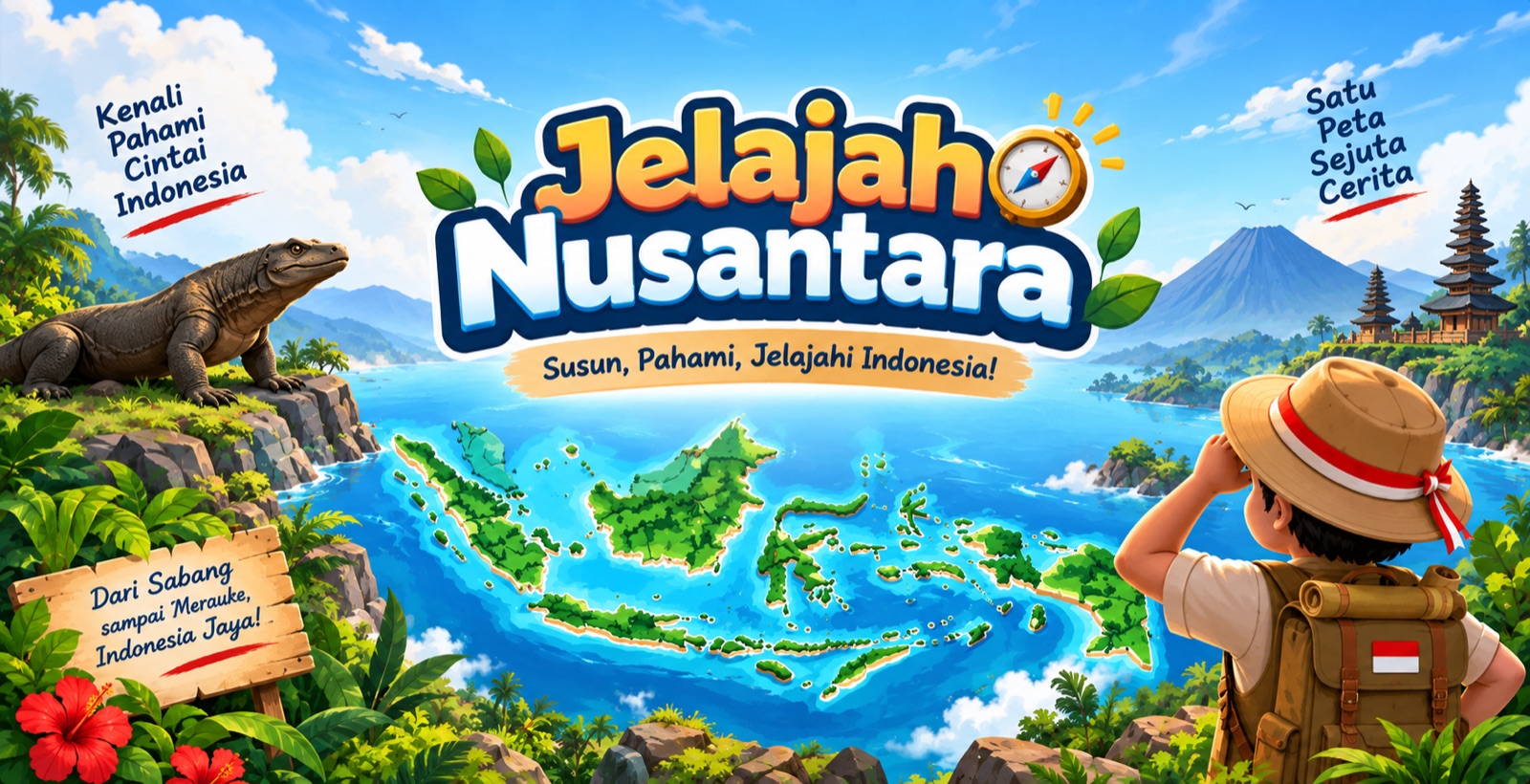
Description
Jelajah Nusantara (“Explore the Archipelago”) is an educational map game. Players drag Indonesia’s islands and provinces into their correct positions on the map, then answer quizzes about each region’s distinctive geography and natural resources, levelling up island by island to earn the title Penjelajah Nusantara (Archipelago Explorer).
Background
This was built as an entry in the Educational Game category of Festival Biru Putih 2026 , organized by the Directorate of Junior High Schools, Ministry of Primary and Secondary Education (Kemendikdasmen). It targets IPS (Social Studies – Geography), Grade VII, Phase D, mapped to the learning objective explaining the diversity of Indonesia’s geographic conditions and linking them to regional natural-resource potential.
Goal
After playing, students should be able to identify the location of Indonesia’s main islands and provinces, name at least one geographic or natural-resource characteristic of each region, and explain how geographic conditions differ between regions.
Features
- Cover page with learning objectives, a how-to-play guide, and a final results screen.
- Levels per island (Sumatra → Java → Kalimantan → Sulawesi → Papua, and more).
- Three meaningful interactions per level: drag & drop placement onto the map, a characteristics quiz (resources, climate, relief), and match/sort regions with commodities or traits.
- Progress indicator (“Level 2 of 5”), stars/points, and island badges as rewards.
- Instant visual feedback on every action.
- Score and progress saved in
localStorage.
Technologies
- Vanilla JavaScript, HTML5, and CSS in a single-page
index.html, with no third-party plugins. - An Indonesia map asset and a separate question bank (
soal.js), all bundled locally.
Technical Decisions
The competition rules shaped the architecture: a single index.html SPA with no redirects, no external URLs or assets (it must run fully offline straight from the file), a 16:9 layout that stays responsive on laptops, tablets, and phones, and load times under five seconds per level. Keeping the question bank in its own file makes it easy to verify and extend the geographic content without touching game logic.
What I Learned
Designing for a curriculum rubric was a different exercise from building for fun: every interaction had to map to a learning objective, the content had to be scientifically accurate, and assessment had to be woven into the gameplay rather than bolted on at the end.
Notes
This is a competition entry, so the source and a live demo are not published yet. The submission package also includes a user guide and a demo video.

Hey! I’m Fanny, the software engineer tending to this digital garden. You can read more about me, or subscribe by email.